Unlocking the Future of CNC Plastic Manufacturing for Innovative Industries
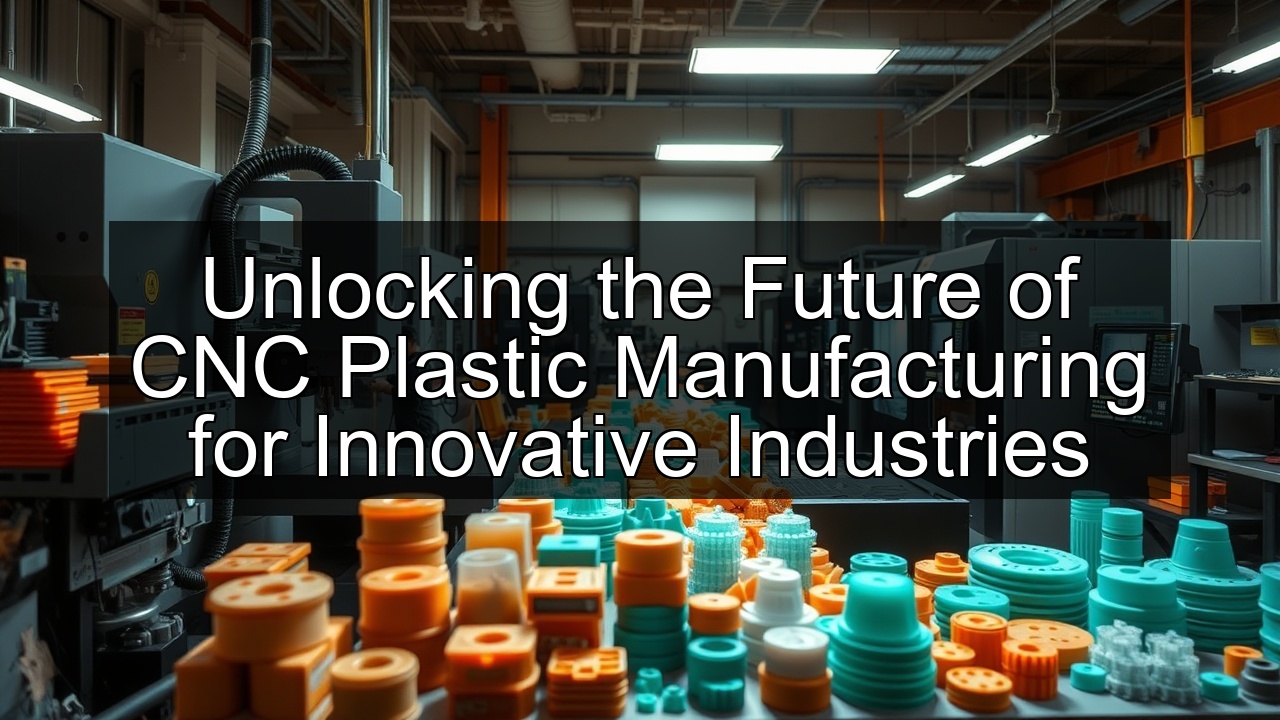
The Evolution of CNC Plastic Manufacturing
CNC plastic manufacturing has transformed how industries produce intricate plastic components, blending precision engineering with material science. This evolution traces back to the mid-20th century, when computer numerical control revolutionized machining from manual labor to automated precision. Today, it stands as a cornerstone for innovative sectors, enabling complex designs that were once impossible. Engineers now rely on CNC systems to shape plastics with micron-level accuracy, driving efficiency and customization across applications.
Historical Overview of CNC Technology
CNC technology emerged in the 1940s and 1950s as a response to the demands of World War II production needs. John T. Parsons, an inventor in the aviation industry, pioneered the concept by using punched cards to control machine tools for helicopter blades. This marked the shift from manual to numerical control, where instructions fed into machines via data cards automated repetitive tasks. By the 1960s, computers integrated into these systems, evolving into full CNC setups that interpreted G-code for multi-axis movements. The 1970s and 1980s saw microprocessors make CNC more accessible, reducing costs and expanding use beyond aerospace to general manufacturing.
In the context of CNC plastic manufacturing, early applications focused on metals, but plastics gained traction in the 1980s as materials like acrylic and nylon became prevalent. Manufacturers adapted CNC mills and lathes for softer materials, addressing challenges like heat sensitivity. This period solidified CNC's role in plastic part machining, allowing for prototypes and small-batch production without extensive tooling. By the 1990s, CAD/CAM software streamlined design-to-production workflows, making plastics CNC machining a staple for custom components. Today, historical advancements underscore how CNC evolved from rigid automation to versatile systems handling diverse thermoplastics and composites, paving the way for modern machined plastic components that meet stringent industry standards.
Advancements in Plastic Machining Techniques
Recent advancements in plastic machining techniques have elevated CNC plastic manufacturing to new heights of efficiency and precision. High-speed spindle motors now operate at 20,000 RPM or more, minimizing tool dwell time and reducing heat buildup in sensitive plastics like PEEK or Delrin. Vacuum-assisted fixturing secures delicate parts without distortion, while adaptive control software adjusts feed rates in real-time based on material feedback, preventing defects like chipping or melting.
Coolant innovations, such as minimum quantity lubrication with compressed air, replace traditional flood coolants that could degrade plastic integrity. Multi-axis CNC machines, including 5-axis models, enable undercuts and complex geometries in a single setup, slashing production time for intricate machined plastic components. Additive manufacturing hybrids, like CNC finishing of 3D-printed plastic blanks, combine layering with subtractive precision, ideal for prototyping in plastics CNC machining. These techniques address the unique challenges of plastic's low thermal conductivity and elasticity, ensuring parts maintain dimensional stability. Industry leaders report up to 40% faster cycle times, fostering innovation in fields requiring lightweight, durable components. As techniques continue to refine, CNC plastic manufacturing promises even greater scalability for high-volume runs and bespoke designs.
Understanding the CNC Plastic Manufacturing Process
The CNC plastic manufacturing process integrates digital design with physical execution, producing parts that balance form, function, and durability. From initial CAD modeling to final inspection, each phase demands meticulous attention to material properties and machine capabilities. This methodical approach ensures machined plastic components meet exact specifications, supporting everything from prototypes to end-use products in demanding environments.
Key Steps in Plastic Part Machining
Plastic part machining begins with design conceptualization using CAD software, where engineers define geometries, tolerances, and material selection—critical for CNC plastic manufacturing success. Tolerances as tight as ±0.001 inches guide the model, factoring in plastic's shrinkage rates during cooling. The file exports to CAM software, generating toolpaths that optimize cutting sequences and minimize air cuts.
Material preparation follows: stock plastic sheets, rods, or blocks get cut to size and fixtured securely on the CNC machine bed, often with soft jaws to avoid marring surfaces. Roughing passes remove bulk material using end mills or face mills at moderate speeds, followed by semi-finishing to refine shapes. Finishing operations employ ball-nose tools for smooth contours, applying light depths of cut to preserve detail.
Post-machining, parts undergo deburring and cleaning to eliminate residue, with annealing sometimes applied to relieve internal stresses in thermoplastics. Throughout, operators monitor chip evacuation to prevent recutting, a common issue in plastics CNC machining. This step-by-step process yields precise plastic part machining outcomes, enabling components that withstand operational stresses while adhering to design intent. Comprehensive documentation tracks each phase, ensuring traceability for quality assurance in production runs.
Tools and Technologies in Plastics CNC Machining
Tools and technologies in plastics CNC machining form the backbone of efficient production, tailored to handle plastic's unique behaviors like ductility and low melting points. Polycrystalline diamond (PCD) end mills and drills dominate, offering superior edge retention and reduced friction compared to carbide alternatives. These tools feature polished flutes to evacuate stringy chips smoothly, preventing buildup that could scratch surfaces.
CNC routers and mills equipped with servo-driven axes provide the stability needed for high-feed rates, while gantry-style machines accommodate large plastic sheets for panel work. Software like Mastercam or Fusion 360 simulates operations, predicting collisions and optimizing parameters for specific plastics—such as slower speeds for ABS to avoid cracking. Laser-guided probing integrates for in-process measurement, adjusting offsets dynamically.
Advanced tech includes cryogenic cooling with liquid nitrogen, which maintains tool sharpness and part integrity during prolonged cuts. Hybrid systems merge CNC with ultrasonic vibration, enhancing surface finishes on brittle plastics like polycarbonate. These elements elevate plastics CNC machining, delivering machined plastic components with Ra values under 0.8 microns. Manufacturers leverage IoT-enabled machines for remote monitoring, boosting uptime and precision in CNC plastic manufacturing workflows. As tools evolve, they unlock finer details and faster throughput, essential for competitive edges in custom fabrication.
Quality Control in Machined Plastic Components
Quality control in machined plastic components ensures reliability and performance, starting with pre-production verification of CAD models against client specs. Dimensional inspections use CMMs (coordinate measuring machines) with touch probes, capturing data points to confirm tolerances in all axes. For plastics, environmental controls maintain consistent humidity and temperature, as these factors influence measurements on hygroscopic materials like nylon.
Visual and microscopic exams detect surface anomalies, such as burrs or haze from overheating, while dye penetrant testing reveals subsurface cracks. Hardness testers gauge material integrity post-machining, verifying no softening occurred. Statistical process control (SPC) charts track variations in real-time, alerting operators to drifts in feed rates or spindle loads during CNC plastic manufacturing.
Functional testing simulates end-use conditions, like pressure or thermal cycling, to validate durability. Traceability systems log serial numbers and batch data, facilitating recalls if needed. Certifications like ISO 9001 guide protocols, emphasizing non-destructive methods to preserve parts. Robust quality control minimizes rejects, often below 1%, and builds trust in machined plastic components. By integrating automated vision systems, manufacturers achieve consistent excellence in plastic part machining, meeting the exacting demands of regulated industries.
Applications of CNC Plastic Manufacturing Across Industries
CNC plastic manufacturing powers diverse applications, delivering lightweight, corrosion-resistant parts that enhance product performance. From high-stakes engineering to everyday gadgets, its versatility spans sectors, where precision and repeatability drive innovation and cost savings.
Innovative Uses in Aerospace and Automotive
In aerospace, CNC plastic manufacturing crafts lightweight brackets, ducting, and interior panels from composites like carbon-fiber-reinforced plastics, reducing aircraft weight by up to 20% for better fuel efficiency. Machined plastic components endure extreme vibrations and temperatures, with parts like radome covers machined to precise curvatures for radar transparency. Prototyping satellite housings via plastics CNC machining accelerates development cycles, allowing rapid iterations under tight deadlines.
Automotive applications leverage CNC for custom dashboards, gearshift knobs, and under-hood insulators from engineering plastics such as PA66 or POM. These components provide electrical insulation and noise dampening, contributing to quieter cabins and safer systems. Electric vehicle battery enclosures, machined with integrated cooling channels, optimize thermal management. Plastic part machining enables just-in-time production for model variants, supporting global supply chains.
In both fields, CNC plastic manufacturing integrates with assembly lines, producing parts that meet FAA or SAE standards. Innovations like multi-material machining combine plastics with inserts for hybrid strength, pushing boundaries in performance. These uses highlight how machined plastic components streamline design, cut assembly times, and foster sustainable mobility solutions.
CNC Plastic Components in Medical Devices
CNC plastic components in medical devices prioritize biocompatibility and sterility, with machined parts like syringe barrels and implant trials crafted from medical-grade PEEK or ULTEM. These withstand autoclaving and bodily fluids, ensuring patient safety in surgical tools and diagnostic equipment. Precision in plastics CNC machining achieves micron-level features for catheter hubs, minimizing tissue trauma during procedures.
Orthopedic jigs and prosthetics benefit from custom-fit components, produced via CNC to match plastics cnc machining by Advanced Industrial patient scans for personalized outcomes. Drug delivery systems incorporate intricate manifolds for precise fluid routing, vital for infusion pumps. Regulatory compliance drives the process, with FDA-approved materials and validated workflows guaranteeing reproducibility.
During pandemics, CNC plastic manufacturing scaled ventilator parts rapidly, demonstrating agility in crisis response. Surface treatments post-machining, like plasma etching, enhance adhesion for coatings. These components reduce device weight, improving wearability in wearables like glucose monitors. Overall, CNC plastic manufacturing elevates medical innovation, delivering reliable machined plastic components that save lives and advance healthcare delivery.
Consumer Electronics and Custom Plastic Parts
Consumer electronics rely on CNC plastic manufacturing for sleek enclosures and internal mounts, using ABS or polycarbonate for impact resistance in smartphones and laptops. Custom plastic parts like button assemblies and heat sinks dissipate warmth efficiently, extending device longevity. Rapid prototyping allows designers to test ergonomics quickly, iterating on housings for better user grip.
In wearables, machined plastic components form lightweight frames for smartwatches, integrating sensors seamlessly. Gaming controllers feature textured grips from CNC-machined TPU, enhancing tactile feedback. Sustainability pushes for recycled plastics in these applications, maintaining aesthetics without compromising strength.
Custom orders thrive in this space, with CNC enabling one-off bezels or stands tailored to brand specs. Plastic part machining supports high-volume runs for accessories like cases, balancing cost and quality. Vibrant finishes via post-processing add appeal, driving market differentiation. CNC plastic manufacturing thus fuels the electronics boom, creating durable, stylish custom plastic parts that captivate consumers daily.
Benefits and Challenges of CNC Plastic Manufacturing
CNC plastic manufacturing offers compelling benefits like unmatched precision and versatility, yet navigates challenges inherent to plastic's properties. Balancing these elements unlocks its full potential for industries seeking efficient, high-quality production.
Advantages of Precision Machining
Precision machining in CNC plastic manufacturing delivers tolerances down to 0.0005 inches, enabling intricate features like threads and slots that assembly methods can't match. This accuracy reduces waste, with material utilization often exceeding 90%, lowering costs for high-value plastics. Versatility shines in handling diverse materials—from rigid PTFE to flexible polypropylene—without retooling, supporting multi-product lines.
Speed accelerates time-to-market; a complex part machines in hours versus days for traditional molding. Scalability suits prototypes to millions, with minimal setup changes. Surface finishes rival injection molding, often Ra 16 or better, eliminating secondary polishing. Design freedom allows undercuts and thin walls, fostering innovation in compact devices.
Customization empowers small-batch runs economically, ideal for R&D. Environmental perks include dry machining options, cutting coolant disposal. Overall, these advantages position plastics CNC machining as a go-to for machined plastic components, enhancing competitiveness through reliability and efficiency in CNC plastic manufacturing.
Common Challenges and Solutions in CNC Operations
Common challenges in CNC operations for plastic include thermal expansion, causing dimensional shifts; solutions involve climate-controlled shops and pre-machining stabilization. Chip management frustrates with gummy residues—sharp, high-helix tools and peck drilling mitigate this, ensuring clean cuts in plastic part machining.
Vibration from high speeds risks deflection; rigid setups with balanced tooling counteract it, maintaining precision. Material inconsistencies, like voids in recycled plastics, demand rigorous inspection—ultrasonic scanning verifies homogeneity pre-cut. Tool wear accelerates on abrasives like glass-filled nylon; diamond coatings extend life by 5x.
Programming errors lead to scrap; simulation software previews paths, reducing trial runs. Costly downtime from setups? Quick-change fixtures streamline transitions. Skilled labor shortages? User-friendly interfaces and AI-assisted programming ease entry. By addressing these, manufacturers optimize CNC plastic manufacturing, turning potential pitfalls into strengths for robust machined plastic components.
The Future of CNC Plastic Manufacturing
The future of CNC plastic manufacturing gleams with technological integration and eco-conscious practices, poised to redefine industrial capabilities. As demands for smarter, greener production rise, this field will lead in sustainable innovation and efficiency.
Emerging Trends and Technologies
Emerging trends in CNC plastic manufacturing spotlight AI-driven optimization, where machine learning predicts optimal parameters for specific plastics, boosting efficiency by 25%. Digital twins simulate entire workflows virtually, slashing physical prototypes. 5G connectivity enables real-time collaboration across global teams, refining designs on-the-fly.
Hybrid manufacturing fuses CNC with 3D printing, roughing printed parts for hybrid strength in aerospace prototypes. Nanotechnology coatings on tools resist wear, extending intervals in plastics CNC machining. AR overlays guide operators, reducing errors in complex setups.
Blockchain ensures supply chain transparency for material sourcing, vital for certified components. Quantum computing hints at hyper-optimized toolpaths, revolutionizing plastic part machining speed. These trends propel machined plastic components toward smarter, faster production, integrating seamlessly with Industry 4.0 ecosystems for unparalleled innovation in CNC plastic manufacturing.
Sustainability in Plastics CNC Machining
Sustainability in plastics CNC machining emphasizes recycled and bio-based materials, like PLA from corn starch, machined without compromising performance. Closed-loop systems recycle scraps onsite, achieving zero-waste goals and cutting raw material needs by 30%. Energy-efficient spindles and LED lighting in facilities lower carbon footprints.
Waterless coolants, such as ionic liquids, replace traditional fluids, preserving resources. Lifecycle assessments guide designs for easier disassembly, promoting circular economies. Certifications like Cradle to Cradle validate eco-friendly practices in machined plastic components.
Collaborations with suppliers yield low-emission plastics, reducing VOCs during operations. Additive-subtractive hybrids minimize excess, ideal for sustainable prototyping. Education trains operators on green protocols, fostering a culture of responsibility. This shift ensures CNC plastic manufacturing aligns with global standards, delivering environmentally sound plastic part machining that supports innovative industries without ecological trade-offs.
See Also
- Sustainability Meets Technology The Green Side of CNC Plastic Manufacturing
- From Idea to Reality The Journey of CNC Machined Plastic Components
- Top Trends in CNC Plastic Manufacturing to Watch in the Coming Years
- Innovative Applications of CNC Machined Plastics in Modern Manufacturing
- Navigating the Challenges of CNC Plastic Machining for Quality Results