Unlocking Precision in Metalworking with Swiss Screw Machining
Understanding Swiss Screw Machining
The Basics of Swiss Screw Machining
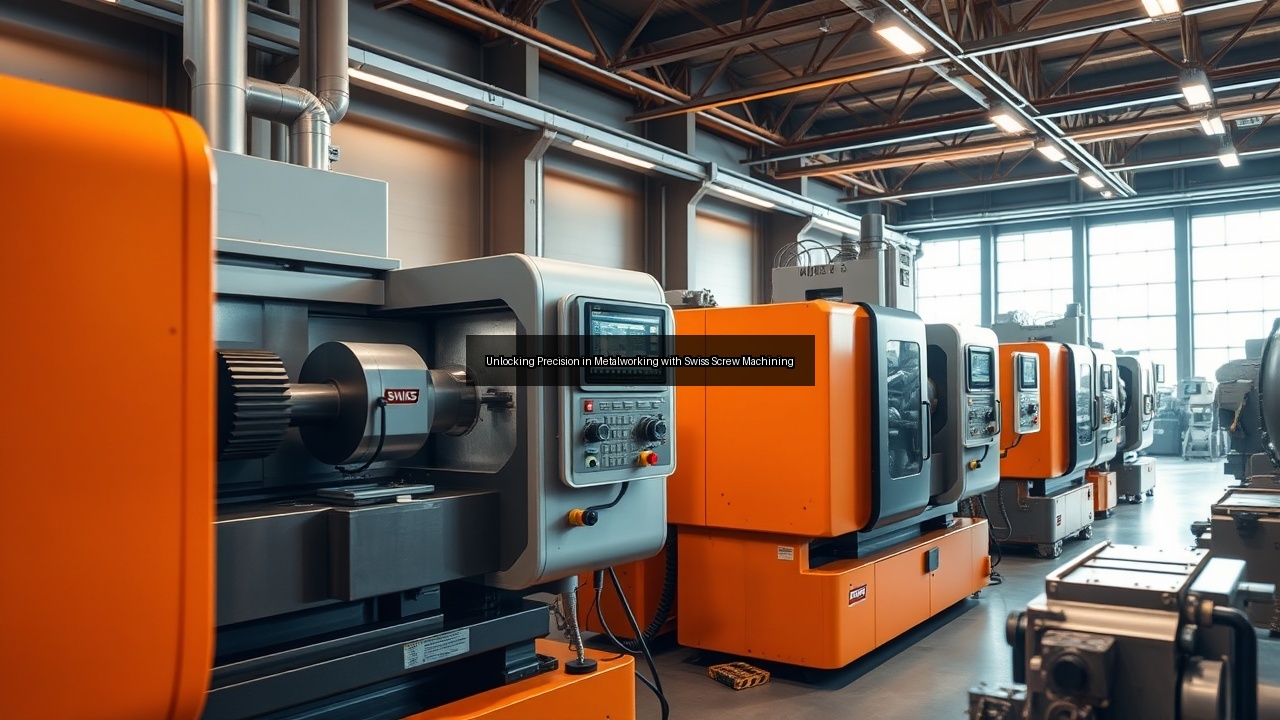
Swiss screw machining stands out as a cornerstone in precision metalworking, enabling manufacturers to produce intricate parts with unparalleled accuracy. This process originates from the watchmaking industry in Switzerland, where tiny, complex components demanded exact tolerances. In swiss screw machining, a sliding headstock moves the workpiece along the Z-axis while the tools remain stationary relative to the spindle. This setup minimizes deflection and ensures tight tolerances down to microns. Operators feed bar stock through a guide bushing, and the machine cuts, drills, and threads in one continuous operation. Modern swiss lathes integrate CNC controls for automated precision, handling materials from brass to titanium. For shops focused on high-volume production, a screw machine equipped for swiss screw machining delivers efficiency without sacrificing quality. Beginners often start with simpler setups, but mastering this technique unlocks doors to advanced metalworking projects. Tools like drills and milling cutters work in tandem, creating features such as grooves and chamfers seamlessly. Understanding these basics empowers machinists to tackle demanding specifications in industries requiring reliability.
Differences Between Swiss and Traditional Machining
Swiss screw machining diverges sharply from traditional machining methods, particularly in how it handles slender parts. In a center lathe or conventional lathe, the workpiece spins between centers, exposing longer sections to vibration and tool pressure, which leads to inaccuracies in thin diameters. Swiss machining counters this by supporting the bar stock close to the cutting tools via a guide bushing, reducing overhang and maintaining stability. Traditional screw machines, like cam-operated turret lathes, rely on mechanical cams for sequencing, limiting flexibility compared to the programmable CNC lathe in swiss setups. While traditional methods excel in roughing large stock, swiss screw machining shines in finishing precise, small-diameter components under 16mm. Machinists note that swiss lathes achieve surface finishes finer than Ra 0.8 microns, far surpassing standard milling machines or basic lathes. This precision stems from the collet chuck holding the material firmly while the headstock slides. For those exploring screw machining options, the swiss approach minimizes scrap rates and setup times, making it ideal for prototypes and production runs alike. Traditionalists may stick to familiar center lathes, but swiss technology redefines efficiency in modern metalworking.
Key Components of Swiss Screw Machining
At the heart of swiss screw machining lie several critical components that ensure flawless operation. The guide bushing stands as the unsung hero, providing rigid support for the bar stock as it advances, preventing bends during threading or drilling. Paired with this, the sliding headstock drives the precise Z-axis movement, allowing tools to engage the material at optimal points. A robust barfeeder automates stock loading, supporting continuous runs up to 12mm or 16mm diameters without interruption. The collet system grips the workpiece securely, while multiple tool stations on the turret lathe enable simultaneous operations like milling and turning. In advanced swiss lathes, the Y-axis adds lateral movement for off-center features, enhancing versatility beyond basic screw lathe functions. Ejector mechanisms swiftly remove finished parts, boosting throughput in high-volume screw machining. CNC controls orchestrate these elements, programming feeds and speeds for materials ranging from stainless steel to exotics. Metalworking professionals rely on brands like Tsugami for reliable integration of these parts. Mastering these components transforms a standard machining setup into a precision powerhouse, directly impacting part quality and production speed.
The Advantages of Swiss Screw Machining
Precision and Accuracy in Production
Precision defines swiss screw machining, delivering tolerances as tight as ±0.0001 inches for critical applications. This accuracy arises from the minimal tool-to-workpiece distance, eliminating chatter that plagues traditional lathes. In production environments, this means fewer rejects and consistent quality across batches of screw machined parts. Manufacturers in aerospace and medical fields prioritize swiss lathes for their ability to hold dimensions on intricate geometries without secondary operations. Unlike standard milling or drilling, swiss screw machining integrates multiple cuts in one pass, reducing cumulative errors. The CNC lathe's digital precision allows for complex profiles, including helical threads and fine bores, all while maintaining concentricity. Shops report up to 50% faster cycle times compared to turret lathes, thanks to optimized tool paths. For small parts under 12mm, the guide bushing ensures straightness within microns, vital for assemblies where fit is non-negotiable. This level of control not only elevates product reliability but also cuts costs by minimizing material waste. As metalworking evolves, swiss screw machining remains the gold standard for demanding specifications.
Efficiency with Barfeeders and Tailstocks
Barfeeders and tailstocks revolutionize efficiency in swiss screw machining, streamlining workflows for uninterrupted production. A high-capacity barfeeder loads material automatically, handling diameters from 12mm to 16mm with minimal operator intervention, ideal for long runs in screw machine operations. This setup feeds stock directly into the guide bushing, syncing with the CNC lathe's cycles to produce parts at rates exceeding 100 per hour. Tailstocks provide additional support for longer workpieces, preventing deflection during heavy cuts like threading or milling. In swiss lathes, the tailstock often incorporates live centers for dynamic stability, enhancing accuracy on slender shafts. Compared to manual loading in traditional center lathes, this automation slashes downtime by 70%, allowing machinists to focus on programming rather than handling. Integration with ejector systems ensures parts exit cleanly, ready for inspection or assembly. Metalworking shops adopting these features see throughput soar, particularly in high-precision sectors. The synergy of barfeeder reliability and tailstock support makes swiss screw machining a powerhouse for scalable manufacturing.
Versatility in Material Handling
Swiss screw machining excels in versatility, adeptly handling a wide array of materials from soft aluminum to tough titanium alloys. The process accommodates varying hardness levels through adjustable speeds and feeds on the CNC lathe, preventing tool breakage during drilling or milling. For brittle materials like ceramics or composites, the gentle support of the guide bushing avoids cracks, a common issue in aggressive traditional machining. Shops process bar stock up to 16mm efficiently, switching between ferrous and non-ferrous metals without reconfiguration. This adaptability extends to hybrid operations, combining turning with secondary milling on the same swiss lathe setup. Turret lathes in swiss configurations allow quick tool changes for threading different pitches or drilling blind holes. In metalworking, this means producing diverse parts—from medical implants to automotive fittings—under one roof. Ejector mechanisms handle delicate components without damage, preserving integrity. As industries demand multifunctional parts, swiss screw machining's material flexibility positions it as an essential tool, reducing the need for multiple machines and boosting overall shop versatility.
Applications of Swiss Screw Machining in Metalworking
Industries Benefiting from Swiss Screw Machining
Numerous industries leverage swiss screw machining for its unmatched precision in producing small, complex components. In the medical sector, it crafts surgical instruments and implant screws with biocompatible materials, ensuring sterility and fit within micrometer tolerances. Aerospace manufacturers rely on swiss lathes to machine fuel nozzles and sensor housings from high-strength alloys, where failure isn't an option. The electronics industry benefits from tiny connectors and pins machined to 12mm diameters, supporting miniaturization trends. Automotive suppliers use screw machines for transmission gears and valve lifters, achieving the durability needed for high-rev engines. Even consumer goods, like watch parts and firearm components, trace their precision back to swiss screw machining techniques. CNC integration allows customization for niche applications, from robotics to telecommunications. Metalworking firms adopting this method report expanded client bases, as the versatility handles everything from prototyping to mass production. With global demand rising, industries turn to swiss machining for reliable, scalable solutions that drive innovation and performance.
Case Studies: Success Stories in Precision Parts
Real-world case studies highlight swiss screw machining's transformative impact on precision parts production. A medical device company overhauled its implant manufacturing by switching to Tsugami swiss lathes, reducing lead times from weeks to days while hitting ±0.0002-inch tolerances on titanium screws. They integrated Y-axis milling for integrated features, eliminating post-processing and cutting costs by 40%. In aerospace, a supplier tackled hydraulic fittings under 16mm, using barfeeders for 24/7 runs; the tailstock support ensured zero defects in 50,000-piece orders, earning FAA certification. An electronics firm machined RF connectors with intricate threading on a CNC swiss setup, boosting yield rates to 99.5% and scaling output threefold. These stories underscore how ejector mechanisms and turret configurations streamline workflows. Another example from automotive involved screw machined shafts for electric vehicles, where swiss precision improved vibration resistance. Shops worldwide share these successes, proving swiss screw machining's role in overcoming production hurdles and delivering superior parts that meet stringent standards.
Comparison with Other Machining Methods
Swiss screw machining outpaces other methods in precision for small parts, but each technique has its niche. Compared to CNC milling machines, swiss lathes offer faster cycle times for turned components, avoiding the setup delays of multi-axis mills. Traditional screw machines, often cam-driven, lack the programmability of swiss CNC setups, making them less adaptable for custom runs. Center lathes handle larger diameters well but falter on slender stock due to unsupported lengths, unlike the guide bushing in swiss machining. For threading operations, swiss screw machining integrates seamlessly with drilling and milling, reducing steps versus separate turret lathe processes. While EDM or waterjet cutting excels in hard materials, swiss methods provide cost-effective volume production without thermal distortion. In metalworking, shops choose swiss for its balance of speed and accuracy—up to 10 times faster than manual lathes for micro-parts. Y-axis features add milling capabilities without tool changes, a edge over basic screw lathes. Ultimately, swiss screw machining dominates where tolerance and efficiency intersect, complementing broader machining arsenals.
Choosing the Right Equipment for Swiss Screw Machining
Overview of Swiss Lathes and CNC Lathes
Selecting equipment for swiss screw machining starts with understanding swiss lathes and CNC lathes, the backbone of precision operations. Swiss lathes feature a unique sliding headstock and guide bushing design, ideal for long, thin parts that demand stability during turning and milling. CNC lathes, encompassing swiss models, add computer control for repeatable accuracy across complex geometries. Entry-level swiss lathes handle bars up to 12mm, while advanced units process 16mm stock with multi-tool turrets. Brands like Tsugami offer modular designs, allowing upgrades for Y-axis or live tooling. In contrast, general CNC lathes prioritize chucking work but lack the bushing support for micro-machining. Metalworking pros evaluate spindle speeds—up to 15,000 RPM in swiss setups—for efficient threading and drilling. Barfeeder compatibility ensures automation, while software interfaces simplify programming. Investing in a robust swiss lathe pays off in reduced scrap and higher throughput, making it essential for shops aiming to excel in screw machining. Pairing these with proper maintenance extends lifespan, securing long-term precision.
The Role of Turret Lathes in Screw Machining
Turret lathes play a pivotal role in screw machining, providing multi-tool access that accelerates production in swiss setups. The turret indexes multiple stations, enabling simultaneous operations like drilling, milling, and threading without pausing the cycle. In swiss screw machining, this setup mounts on the tool side, opposite the sliding headstock, for balanced cutting forces. Traditional turret lathes use cams for sequencing, but CNC versions in swiss lathes offer programmable flexibility for custom parts. For diameters under 16mm, the compact design fits barfeeders seamlessly, supporting high-volume runs of screw machined components. Machinists appreciate the quick-change tools that minimize downtime, boosting efficiency over single-tool center lathes. In metalworking, turret configurations handle live tools for off-axis milling, adding versatility to basic turning. Ejectors integrated into the turret ensure clean part removal, preventing jams. As screw machining evolves, turret lathes remain indispensable, bridging manual precision with automated power in demanding applications.
Understanding Y-Axis and Ejector Mechanisms
Y-axis and ejector mechanisms elevate swiss screw machining by enabling advanced features and smooth part handling. The Y-axis allows tools to move laterally, facilitating off-center drilling and milling without repositioning the workpiece—crucial for asymmetrical designs in CNC lathes. This addition to swiss lathes expands capabilities beyond axial turning, producing slots or contours in one setup, ideal for 12mm complex parts. Ejectors, typically pneumatic or mechanical, propel finished components from the collet after machining, preventing damage and enabling rapid cycling. In high-precision metalworking, precise Y-axis control achieves sub-micron accuracy on threads and bores, reducing secondary operations. Tailstock integration often pairs with ejectors for supported longer parts, ensuring stability. Shops using Tsugami models with these features report 30% productivity gains, as automation handles intricate geometries effortlessly. Understanding these mechanisms guides equipment selection, optimizing for versatility in screw machine operations. They transform standard lathes into multifaceted tools, meeting diverse industry needs with efficiency.
Future Trends in Swiss Screw Machining
Innovations in Swiss Machining Technology
Innovations in swiss machining technology propel the field forward, integrating AI and advanced sensors for smarter operations. Next-gen swiss lathes feature real-time monitoring of tool wear via vibration analysis, predicting failures before they impact precision in screw machined parts. Hybrid machines combine swiss turning with additive manufacturing, allowing in-process repairs on complex components under 16mm. Enhanced CNC software optimizes tool paths using machine learning, slashing cycle times by 25% for threading and milling tasks. Brands like Tsugami pioneer compact designs with expanded Y-axis ranges, enabling deeper undercuts without multiple setups. Laser integration for pre-machining marking boosts traceability in medical and aerospace applications. These advancements address miniaturization demands, producing parts with tolerances below 1 micron. Metalworking enthusiasts watch as IoT connectivity links swiss screw machining setups to factory networks, enabling predictive maintenance. Such innovations ensure the process remains at the forefront, delivering unprecedented efficiency and accuracy for future challenges.
The Impact of Automation on Screw Machining
Automation reshapes screw machining, with robotic arms loading barfeeders and unloading ejectors to create fully lights-out operations in swiss lathes. Collaborative robots (cobots) assist machinists in tool changes on turret lathes, reducing human error and speeding setups for CNC runs. In swiss screw machining, automated vision systems inspect parts mid-cycle, halting production only for true defects and maintaining 99.9% yields. This shift cuts labor costs by 40% while scaling output for high-volume metalworking. Integration with AGVs transports stock to machines, minimizing handling in shops focused on 12mm precision parts. AI-driven scheduling prioritizes jobs across multiple swiss setups, optimizing throughput. Tailstocks now feature auto-adjusting centers for varying materials, enhancing adaptability. As automation deepens, screw machine operators upskill in programming, ensuring seamless transitions. The result? Faster, safer production that meets rising demands without compromising the hallmark precision of swiss methods.
Sustainability Practices in Metalworking
Sustainability practices gain traction in metalworking, with swiss screw machining leading through efficient material use and eco-friendly operations. Dry machining techniques eliminate coolants, reducing waste in CNC lathe processes while maintaining precision on threads and drills. High-efficiency barfeeders minimize scrap by precisely feeding stock up to 16mm, optimizing every inch for screw machined parts. Shops adopt recyclable tooling and energy-saving spindles in swiss lathes, lowering carbon footprints without sacrificing speed. Closed-loop systems recycle chips from milling and turning, recovering up to 95% of metals like brass and steel. Certifications drive adoption, as clients demand green suppliers for aerospace and medical components. Innovations like low-power Y-axis drives cut electricity use by 20%, aligning with global standards. In turret lathe setups, modular designs extend equipment life, curbing e-waste. Swiss screw machining's precision inherently supports sustainability by producing durable parts that last longer, reducing replacement needs. Forward-thinking manufacturers integrate these practices, balancing profitability with environmental responsibility in evolving metalworking landscapes.