The Future of Temperature Measurement with RTD and Thermocouple Technology
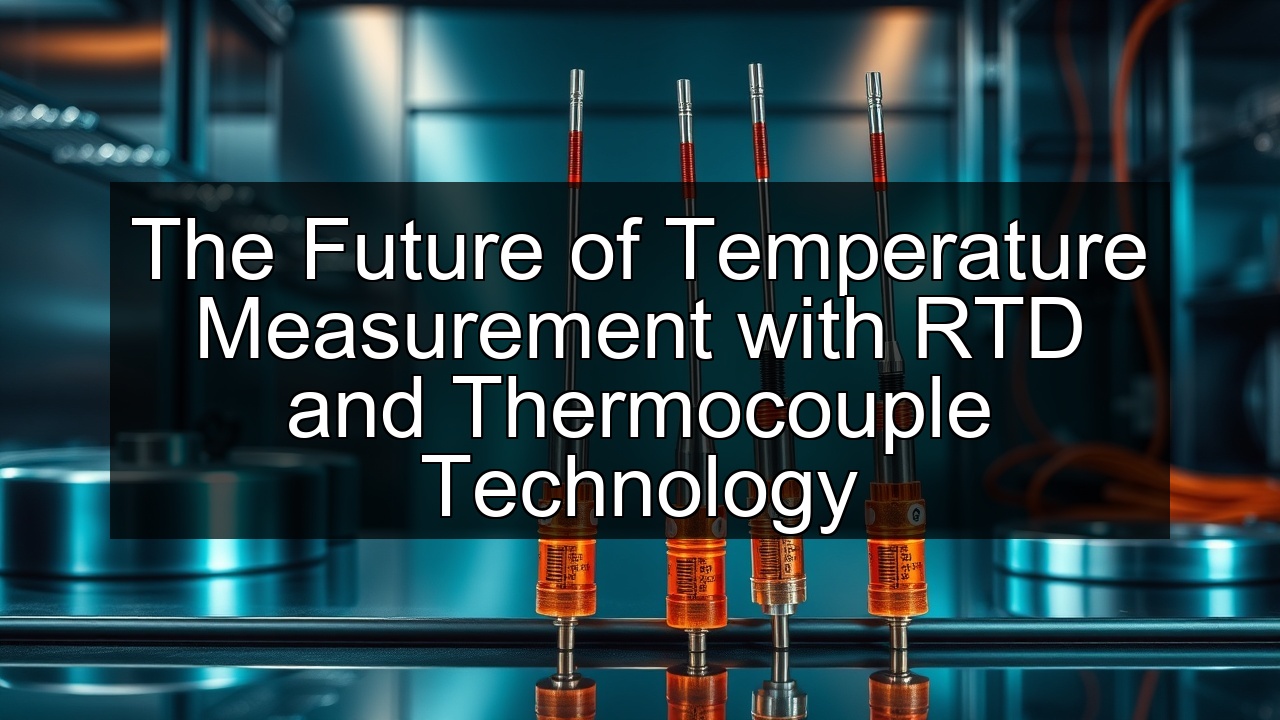
Understanding RTD and Thermocouple Technologies
What are RTDs and Thermocouples?
Resistance Temperature Detectors (RTDs) and thermocouples are two primary technologies used for temperature measurement. RTDs operate on the principle that the electrical resistance of certain metals increases with temperature. Typically made from pure platinum, RTDs provide high accuracy and stability, making them ideal for applications requiring precise temperature control. In contrast, thermocouples consist of two dissimilar metals joined at one end, generating a voltage that correlates with temperature differences. This simplicity and wide temperature range allow thermocouples to perform well in harsh environments. Both sensors play crucial roles in industrial processes, HVAC, and various scientific applications, demonstrating their versatility and reliability in temperature measurement.
Key Differences Between RTD and Thermocouple Sensors
RTDs and thermocouples differ significantly in construction, accuracy, and application. RTDs, while more accurate, operate within a narrower temperature range, typically from -200°C to 850°C, and have better repeatability. Their sensitivity to small temperature changes makes them suitable for laboratory and high-precision environments. Conversely, thermocouples can measure extreme temperatures, extending from -200°C to 1250°C or more, depending on the type. They also respond more quickly due to their lower thermal mass. However, they generally offer less accuracy than RTDs, particularly at lower temperatures. Understanding these differences helps industries choose the right sensor for their specific applications, ensuring optimal performance and reliability in temperature measurement.
Applications of RTDs and Thermocouples in Temperature Measurement
RTDs and thermocouples find applications across various industries, each excelling in specific contexts. RTDs are prevalent in the food and beverage sector, pharmaceuticals, and laboratories, where precision is vital. They also serve in HVAC systems for temperature control and monitoring. Thermocouples, with their robust design and broad temperature range, thrive in industries such as oil and gas, metal processing, and power generation. In these sectors, thermocouples endure extreme conditions while delivering reliable temperature readings. Together, RTD thermocouple assemblies offer a comprehensive solution for temperature measurement, enabling industries to maintain safety, efficiency, and quality in their operations.
Innovations in RTD Thermocouple Assemblies
Advancements in Sensor Design and Materials
Recent innovations in sensor design and materials enhance the performance of RTD thermocouple assemblies. Manufacturers now utilize advanced materials that increase durability and resistance to environmental stressors, such as moisture and corrosive substances. Innovations like thin-film technology for RTD sensors enable manufacturers to produce more compact and responsive devices without sacrificing accuracy. Additionally, the integration of nanotechnology in sensor construction improves thermal response times and reduces lag in readings. These advancements lead to more reliable temperature measurement solutions, optimizing processes in various industries. The continuous evolution in sensor design reflects the commitment to improving temperature measurement techniques and meeting the demands of modern applications.
The Role of Thermowells in Enhancing Measurement Accuracy
Thermowells play a critical role in enhancing the accuracy and safety of temperature measurement in RTD thermocouple assemblies. These protective tubes house temperature sensors, shielding them from high pressure, chemical exposure, and mechanical stress. By isolating the sensor from the process environment, thermowells maintain sensor integrity and ensure consistent readings. They also allow for easy replacement of sensors without disrupting the process, minimizing downtime. Properly designed thermowells improve heat transfer to the sensor, resulting in faster response times. Engineers must consider factors like material selection, insertion length, and diameter when designing thermowells to ensure optimal performance in temperature measurement applications.
Integration of Transmitters and Calibration Techniques
The integration of transmitters with RTD thermocouple assemblies enhances the overall measurement system. Transmitters convert the sensor output into standardized signals, facilitating remote monitoring and data acquisition. Advanced transmitters also offer features like digital communication, enabling seamless integration into modern control systems. Calibration techniques play a vital role in ensuring accurate temperature readings. Regular calibration of RTD sensors and thermocouples guarantees their performance remains within specified limits. Techniques such as comparison calibration and temperature baths provide reliable methods for calibration, ensuring that temperature measurements reflect true process conditions. The combination of transmitters and robust calibration practices establishes a reliable temperature measurement system, crucial for industrial applications.
Industry Applications and Future Trends
Temperature Measurement in North America: Market Overview
North America represents a significant market for temperature measurement technologies, driven by diverse industrial applications. The region's industries, including oil and gas, pharmaceuticals, and food processing, demand high-precision temperature measuring devices like RTD and thermocouple assemblies. Increasing automation and the adoption of Industry 4.0 principles further propel the market, as industries seek enhanced monitoring and control capabilities. Emerging technologies, such as wireless temperature sensors, continue to reshape the landscape, providing real-time data and improving operational efficiency. The North American market will likely experience growth as industries invest in advanced temperature measurement solutions, focusing on accuracy, reliability, and integration with digital systems.
Use of RTD and Thermocouple Assemblies in Oil and Gas Industry
The oil and gas industry heavily relies on RTD thermocouple assemblies for accurate temperature measurement throughout its operations. These assemblies monitor temperatures in various processes, including drilling, refining, and transportation. The ability to withstand extreme conditions and deliver reliable data makes thermocouples particularly valuable in drilling operations, where high temperatures and pressures prevail. RTDs, with their precision, are essential in refining processes, ensuring optimal operation and safety. The integration of advanced sensors with real-time data systems enhances monitoring capabilities, allowing for swift responses to temperature fluctuations. As the oil and gas industry evolves, the demand for innovative temperature measurement solutions will continue to rise, driving technological advancements in RTD and thermocouple assemblies.
The Future of Temperature Sensors: Trends and Predictions
The future of temperature sensors, particularly RTD thermocouple assemblies, promises exciting advancements. Increasing focus on automation and IoT connectivity will drive the development of smart temperature sensors capable of real-time monitoring and analytics. These sensors will not only measure temperature but also communicate with control systems, enabling predictive maintenance and reducing downtime. Enhanced materials and designs will further improve sensor performance, offering greater accuracy and faster response times. As industries prioritize sustainability, manufacturers will likely explore eco-friendly materials and energy-efficient designs. The ongoing evolution of temperature measurement technologies will shape the future of industrial processes, ensuring safety, efficiency, and reliability in temperature control.