Exploring Innovative Dosage Forms with Contract Supplement Manufacturers
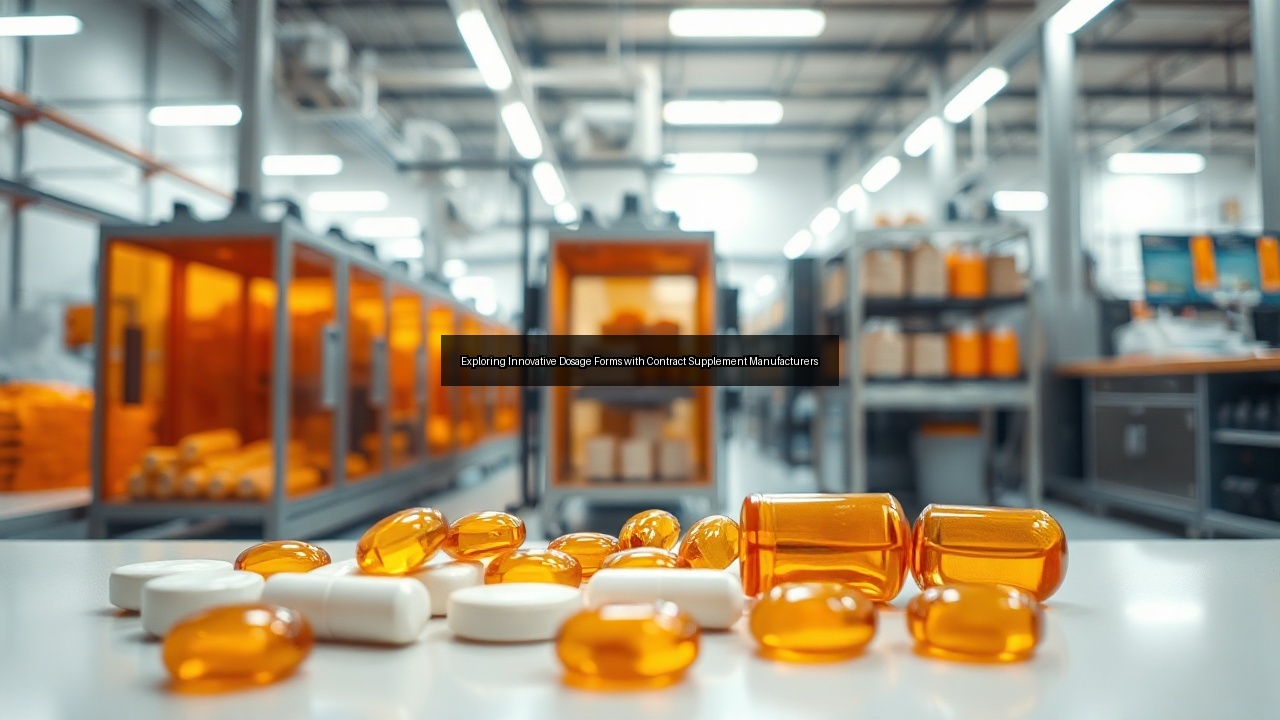
Understanding Innovative Dosage Forms
The Evolution of Supplement Dosage Forms
Supplement dosage forms have shifted dramatically over recent decades as consumer demands for convenience and efficacy grow. Traditional capsules and tablets gave way to advanced options that improve absorption and user experience. Contract supplement manufacturers lead this change by investing in research that refines how active ingredients release in the body. They track inventory closely to maintain steady production of these evolving formats while meeting market needs. Nutritional sciences drive much of the progress, revealing how different structures affect bioavailability. Manufacturers now prioritize forms that reduce swallowing difficulties and support faster uptake. This evolution reflects direct responses to feedback from retailers and end users who seek practical solutions. Contract manufacturers apply these insights to scale production without compromising consistency or potency across batches.
Exploring Oral Dissolving Tablets (ODT)
ODT technology offers rapid disintegration on the tongue without water, making it ideal for active lifestyles. Contract supplement manufacturers formulate these tablets with specific disintegrants and flavors that mask bitter notes from vitamins or minerals. The process demands precise control over compression forces to achieve the right balance of hardness and quick dissolve time. Many brands partner with experienced contract manufacturers to bring ODT products to market efficiently. This dosage form expands accessibility for children and older adults who struggle with standard pills. Manufacturers maintain strict inventory protocols to ensure raw materials like mannitol remain available for consistent runs. ODT options also support higher compliance rates because users find them more pleasant. Contract supplement manufacturers test disintegration speeds under varied humidity conditions to guarantee performance in real-world storage.
Benefits of Effervescent Tablets in Supplement Manufacturing
Effervescent tablets deliver ingredients through a fizzy solution that enhances taste and absorption speed. Contract supplement manufacturers produce these by combining acids and bases that react upon contact with liquid. The format proves especially useful for electrolytes and high-dose minerals that benefit from liquid delivery. Brands gain marketing advantages because effervescent products feel premium and modern. Manufacturers optimize particle sizes and packaging to prevent premature reactions that could affect shelf life. This dosage form reduces the need for large pills while allowing higher active loads per serving. Contract supplement manufacturers often integrate effervescent lines into existing facilities to diversify client offerings. Quality controls monitor reaction consistency across production lots to maintain reliable fizz and nutrient delivery every time.
The Role of Contract Supplement Manufacturers
What to Look for in a Contract Manufacturer
Selecting the right contract manufacturer requires evaluation of technical capabilities, regulatory track record, and communication practices. Brands examine equipment flexibility that supports multiple dosage forms including ODT and effervescent tablets. A strong contract supplement manufacturer provides transparent pricing models and clear timelines from development through delivery. Experience with inventory management systems ensures raw materials and finished goods stay organized without delays. Prospective partners should demonstrate expertise in scaling small batches to commercial volumes smoothly. References from prior clients reveal how well the manufacturer handles unexpected formulation challenges. Contract manufacturers that invest in ongoing staff training deliver more reliable outcomes. Brands benefit when the partner maintains open dialogue about potential supply chain shifts affecting supplement production.
Key Services Offered by Contract Manufacturers
Contract manufacturers supply formulation development, stability testing, and full-scale production under one roof. They handle sourcing of excipients and active ingredients while managing inventory to prevent shortages. Many offer regulatory support that covers labeling requirements across different markets. Contract supplement manufacturers also provide packaging solutions tailored to protect sensitive dosage forms like gels or effervescent tablets. Analytical testing services verify potency and purity at multiple production stages. Some extend marketing assistance through sample production for trade shows. These services allow brands to focus on sales and innovation rather than operational details. Reliable contract manufacturers maintain flexible minimum order quantities that suit both startups and established companies.
Case Studies of Successful Collaborations
One wellness brand partnered with a contract supplement manufacturer to launch an ODT line that captured significant market share within its first year. The manufacturer refined the formulation for faster dissolution while keeping costs competitive through efficient inventory practices. Another collaboration produced a line of effervescent tablets targeting athletes, resulting in repeat orders and expanded distribution. The contract manufacturers involved applied advanced sciences to improve ingredient stability in humid climates. These projects succeeded because both parties aligned on quality controls from initial trials onward. Inventory tracking systems prevented production halts during peak demand periods. Such examples show how targeted partnerships accelerate time-to-market for innovative supplement products. Brands consistently report stronger consumer feedback when working with manufacturers experienced in novel dosage forms.
Quality Control in Supplement Manufacturing
Importance of Quality Assurance in Dosage Forms
Quality assurance protects consumers by verifying that each dosage form meets labeled potency and purity standards. Contract supplement manufacturers implement layered checks that begin with incoming raw material inspection and continue through final packaging. This approach reduces variability that could affect product performance in ODT or effervescent formats. Consistent quality builds consumer trust and supports repeat purchases across supplement lines. Manufacturers document every step to allow traceability if any issue arises post-distribution. Strong quality systems also minimize waste by catching deviations early in the production cycle. Contract manufacturers that prioritize these measures deliver products that perform reliably under varying storage conditions. Brands gain peace of mind knowing their reputation rests on verified processes rather than assumptions.
Regulatory Compliance and Standards
Regulatory compliance demands adherence to current good manufacturing practices that cover every aspect of supplement production. Contract supplement manufacturers maintain certifications that demonstrate alignment with FDA and international guidelines. They update standard operating procedures whenever agencies revise requirements for dosage form testing. Compliance extends to labeling accuracy and claim substantiation using data from nutritional sciences. Manufacturers conduct regular audits to identify gaps before inspections occur. This proactive stance prevents costly recalls and maintains smooth operations. Contract manufacturers also guide clients through dossier preparation for new market entries. Their expertise ensures supplement products reach shelves without regulatory setbacks that could delay launches.
Testing Methods for Ensuring Product Integrity
Testing methods include dissolution profiling, microbial analysis, and content uniformity checks tailored to each dosage form. Contract supplement manufacturers employ HPLC and other analytical tools to confirm active ingredient levels in finished tablets and gels. Accelerated stability studies predict shelf life under different temperature and humidity exposures. These protocols safeguard against degradation that might alter effervescent reaction times or ODT performance. Manufacturers log results systematically to support batch release decisions. Advanced imaging techniques sometimes verify coating thickness on specialized tablets. Contract manufacturers integrate real-time monitoring during production to catch anomalies instantly. Such rigorous testing upholds product integrity from manufacturing floor to consumer hands.
Sustainability in Supplement Manufacturing
Eco-Friendly Practices Among Manufacturers
Eco-friendly practices include energy-efficient equipment and reduced water usage during tablet compression and coating processes. Contract supplement manufacturers adopt renewable energy sources where feasible to lower their carbon footprint. They also optimize packaging designs that use recycled materials without compromising protection for moisture-sensitive products. Inventory systems help minimize overproduction and subsequent waste of supplement ingredients. Many manufacturers recycle solvents and other process materials to reduce environmental impact. These steps align with growing retailer and consumer expectations for responsible production. Contract manufacturers that document their sustainability metrics provide brands with transparent supply chain stories. Such practices strengthen long-term partnerships while supporting broader environmental goals.
Innovations in Sustainable Dosage Forms
Innovations feature plant-based disintegrants in ODT formulations and biodegradable blister packs for effervescent tablets. Contract supplement manufacturers experiment with alternative excipients derived from agricultural byproducts to replace synthetic options. Soft gel capsules now incorporate algae-derived materials that maintain integrity while lowering reliance on animal gelatin. These advances require careful validation to ensure dissolution rates and stability remain uncompromised. Manufacturers test new sustainable ingredients through pilot batches before full-scale runs. Inventory management adapts to accommodate seasonal sourcing of eco-friendly raw materials. Contract manufacturers share these developments with clients seeking differentiated products. The result is dosage forms that meet performance standards alongside environmental considerations.
The Future of Sustainable Supplement Production
The future points toward closed-loop systems where manufacturers recycle nearly all process waste back into production cycles. Contract supplement manufacturers explore carbon-negative processes through improved energy recovery and sourcing strategies. Emerging sciences around bio-based polymers will likely expand options for sustainable gel and tablet coatings. Inventory forecasting tools will grow more precise to match production exactly with demand and cut excess. Brands that collaborate early with forward-thinking contract manufacturers position themselves ahead of regulatory shifts favoring greener practices. Sustainability will increasingly influence purchasing decisions as awareness spreads. Contract manufacturers investing in these areas today will lead tomorrow's market. Their ongoing work ensures supplement production supports both health outcomes and planetary health.