Electrifying Performance How Custom Electric Motors Power Modern Machines
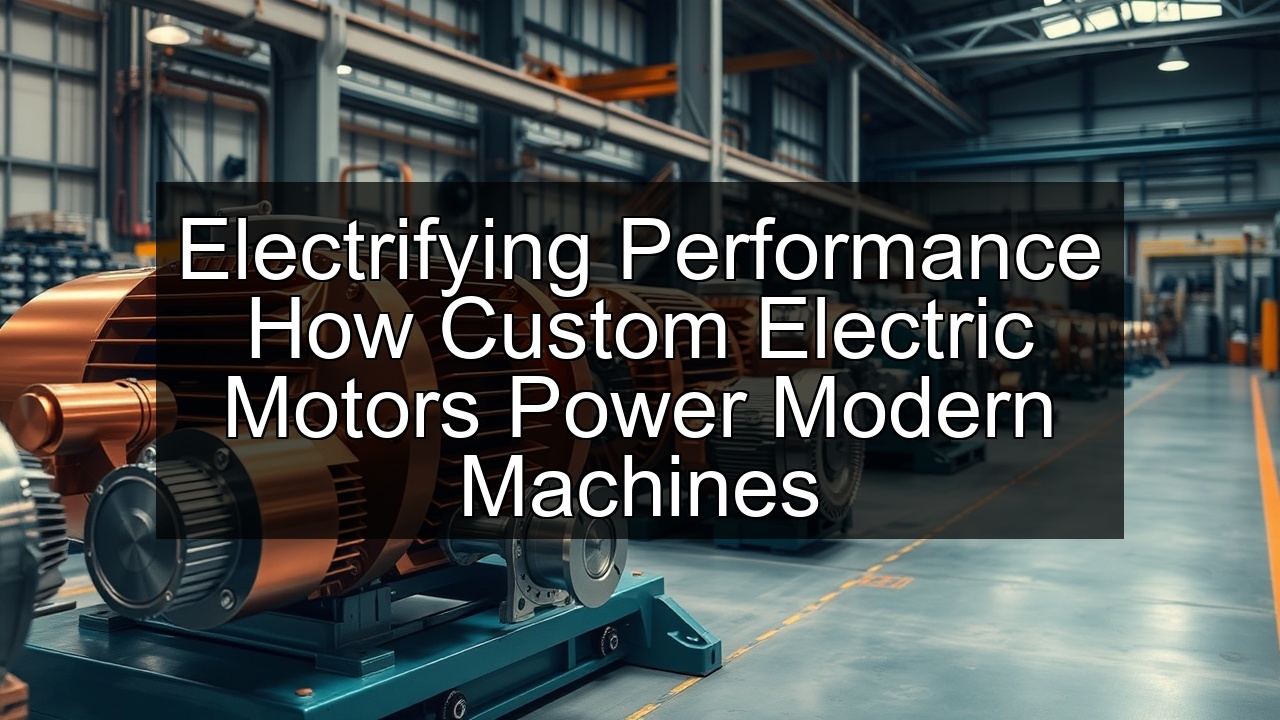
The Rise of Custom Electric Motors in Modern Machinery
Evolution of Electric Motors
Electric motors trace their roots back to the early 19th century when inventors like Michael Faraday demonstrated electromagnetic rotation, laying the groundwork for devices that convert electrical energy into mechanical power. Over decades, engineers refined these machines, shifting from basic direct current setups to sophisticated alternating current systems. The industrial revolution accelerated this progress, as factories demanded reliable power sources beyond steam engines. By the mid-20th century, electric motors became staples in manufacturing, powering everything from conveyor belts to assembly lines. Today, custom motors represent the pinnacle of this evolution. Manufacturers tailor these electric motors to specific needs, incorporating advanced materials like rare-earth magnets for superior efficiency. Unlike off-the-shelf options, custom electric motors address unique challenges in modern machinery, such as high-torque requirements in robotics or compact designs for drones. This customization stems from rapid advancements in electronics and materials science, enabling motors that operate at variable speeds with minimal energy loss. Industries now rely on these bespoke solutions to boost productivity and reduce downtime. The shift toward custom motors reflects broader trends in automation, where precision and adaptability drive innovation. Engineers design them to integrate seamlessly with sensors and control systems, creating smart machinery that responds in real-time to operational demands. As electric vehicles proliferate, custom motors evolve further, optimizing for regenerative braking and extended range. This ongoing development ensures electric motors remain central to powering the machines that shape our world.
Advantages of Custom Motors over Standard Options
Custom motors outperform standard versions by delivering tailored performance that aligns precisely with application needs, eliminating the inefficiencies of generic designs. Engineers craft these custom electric motors to match exact specifications, such as torque output or speed ranges, which off-the-shelf motors often fail to achieve without modifications. This precision reduces energy consumption by up to 30 percent in some cases, as components like windings and cores optimize for the task at hand. In high-stakes environments like aerospace, where weight matters, custom motors shed unnecessary bulk while maintaining power density. They also extend lifespan through robust materials resistant to heat and vibration, cutting maintenance costs over time. For businesses seeking customized motors, the initial investment pays off in enhanced reliability—downtime plummets when motors fit perfectly into existing systems. Integration becomes effortless, avoiding the compatibility issues that plague standard electric motors. Moreover, custom options allow for innovative features, like built-in encoders for feedback control, which standard models rarely include. Companies specializing in custom motor production use advanced simulation software to predict and refine designs before manufacturing, ensuring flawless execution. This approach not only meets but exceeds regulatory standards for efficiency and safety. In competitive markets, adopting custom motors gives manufacturers an edge, as they enable faster production cycles and superior product quality. Ultimately, the advantages of custom motors lie in their ability to transform generic machinery into high-performance powerhouses, driving innovation across sectors.
Types of Custom Electric Motors and Their Applications
Brushless DC Motors: Efficiency and Performance
Brushless DC motors stand out for their exceptional efficiency, eliminating the friction and wear of traditional brushes through electronic commutation. These custom electric motors use permanent magnets and electronic controllers to generate smooth, precise rotation, ideal for applications demanding high performance and low maintenance. In consumer electronics, like computer cooling fans, brushless DC motors deliver quiet operation and consistent speeds without sparking risks. Automotive sectors favor them for electric power steering, where quick response times enhance vehicle handling. Customizing these motors involves adjusting stator windings or rotor configurations to suit specific loads, such as in drones that require lightweight yet powerful propulsion. Efficiency ratings often exceed 90 percent, far surpassing brushed counterparts, which translates to longer battery life in portable devices. Manufacturers produce brushless DC variants with integrated gears for torque amplification in robotics, ensuring seamless motion in automated arms. The absence of brushes also means reduced electromagnetic interference, making them perfect for medical equipment like surgical tools. As demand for custom motors grows, engineers incorporate sensorless control for even greater reliability in harsh environments. These motors excel in scenarios requiring variable speed operation, from HVAC systems to electric bicycles. Their compact design allows embedding into space-constrained machinery, boosting overall system performance. Brushless DC technology continues to evolve, with advancements in magnet materials pushing efficiency boundaries further, solidifying their role in modern applications.
Induction Motors: Powering Heavy Machinery
Induction motors harness alternating current to induce rotor motion via electromagnetic fields, providing rugged power for heavy machinery in industrial settings. These custom electric motors thrive in environments like steel mills and mining operations, where durability trumps finesse. By customizing rotor bars and stator slots, engineers optimize them for high starting torque, essential for conveyor systems hauling massive loads. Unlike DC motors, induction types draw power directly from AC grids, simplifying installation in factories. Custom motors address specific frequencies and voltages, ensuring compatibility with regional power supplies while minimizing harmonic distortions. In manufacturing, they drive pumps and compressors with unwavering reliability, even under continuous overloads. Protective enclosures make custom induction motors resistant to dust and moisture, extending service life in outdoor applications like wind turbine yaw systems. Efficiency improvements come from premium laminations that reduce core losses, aligning with energy-saving mandates. For heavy-duty trucks, scaled-down versions power auxiliary systems, contributing to overall vehicle efficiency. The asynchronous nature of induction motors allows slip for speed control, a boon in variable-load scenarios. When paired with variable frequency drives, custom induction motors achieve precise regulation, transforming them into versatile workhorses. Their low cost and scalability make them a go-to for custom motor projects in large-scale production. As industries push for greener operations, enhanced designs incorporate regenerative capabilities, recovering energy during deceleration.
Synchronous Motors: Precision in Motion
Synchronous motors lock their rotor speed to the alternating current frequency, delivering unmatched precision for applications requiring exact timing and positioning. Custom electric motors of this type feature rotors with field windings or permanent magnets that synchronize perfectly with the stator's rotating magnetic field, eliminating speed variations. In textile machinery, they ensure uniform fabric winding, preventing defects in high-speed production. Engineers customize synchronous motors by selecting pole configurations to match desired RPM, ideal for servo motor integrations in CNC machines. Their constant speed makes them invaluable in power generation, where they drive exciters for stable voltage output. Custom versions often include damper windings to handle transient loads, enhancing stability in grid-connected systems. Efficiency peaks at unity power factor, reducing electrical bills in large installations like chemical plants. For precision engineering tasks, such as clock mechanisms or laboratory centrifuges, these motors provide ripple-free torque. In electric vehicles, synchronous motors power hybrid systems, offering smooth acceleration without gear shifts. Customization extends to cooling methods—air or liquid—to suit compact or high-power needs. Their ability to operate as generators during braking adds regenerative potential, appealing to sustainable designs. Synchronous motors excel where standard induction types falter in accuracy, making custom iterations essential for advanced automation. Ongoing innovations focus on rare-earth-free rotors to lower costs without sacrificing performance.
DC Motors: Versatility in Design
DC motors convert direct current into rotational force through commutators and brushes, offering versatile designs that adapt to diverse applications via simple voltage control. Custom electric motors in this category shine in battery-powered devices, from toys to industrial robots, where speed and direction reversals occur frequently. Engineers tailor armature windings and field magnets to achieve specific torque curves, suiting them for elevator systems that demand gradual acceleration. Unlike AC alternatives, DC motors provide straightforward speed regulation, making custom versions popular in model trains and remote-controlled vehicles. In manufacturing, they actuate conveyor adjustments with precise incremental movements. Customization includes coreless designs for low-inertia responses in handheld tools, reducing startup lag. Permanent magnet DC motors, a common custom variant, boast high efficiency and compact footprints, perfect for medical pumps delivering fluids at controlled rates. Brushed DC motors handle intermittent high loads, while brushless adaptations extend life in continuous duty cycles. Integration with gearboxes amplifies torque for heavy lifting in warehouse automation. Custom DC motors often feature encoders for closed-loop feedback, enhancing accuracy in servo applications. Their compatibility with solar or battery sources supports off-grid operations in remote sensing equipment. Versatility stems from modular construction, allowing easy upgrades like higher current ratings. As direct current sources evolve with better batteries, custom DC motors will power more portable innovations, bridging traditional and emerging technologies.
Custom Electric Motors in the Manufacturing Sector
Role of Custom Motors in Production Lines
Custom motors drive the heartbeat of production lines, enabling synchronized operations that streamline manufacturing processes from assembly to packaging. In automotive plants, tailored electric motors power robotic welders, ensuring pinpoint accuracy to assemble chassis components without human error. These custom electric motors integrate with PLC systems for real-time adjustments, adapting to production variations like part sizes. In food processing, they operate conveyor belts at variable speeds to match throughput, preventing bottlenecks and waste. Customization focuses on IP-rated enclosures for hygiene compliance, crucial in pharmaceutical lines mixing delicate compounds. High-efficiency designs reduce heat buildup, maintaining consistent performance during 24/7 shifts. For electronics assembly, compact custom motors in pick-and-place machines handle micro-components with sub-millimeter precision, boosting yield rates. They often pair with gears for amplified force in pressing operations, shaping metals or plastics efficiently. Inventory of custom motors ensures quick swaps, minimizing line stoppages that cost thousands per hour. In textile factories, servo-enhanced custom motors control loom speeds, producing flawless weaves at scale. Their role extends to quality control stations, where motors drive inspection scanners for defect detection. As manufacturing embraces Industry 4.0, custom electric motors incorporate IoT sensors for predictive maintenance, foreseeing failures before they disrupt flows. This integration elevates production lines into intelligent ecosystems, where custom motors not only power but also optimize entire workflows for maximum output.
Inventory Management for Custom Electric Motors
Effective inventory management for custom electric motors balances just-in-time delivery with stock buffers to support uninterrupted manufacturing operations. Companies track variants like brushless DC or induction motors using RFID tags, ensuring the right custom motor reaches the assembly floor promptly. Suppliers collaborate on lead-time forecasts, as custom motors require weeks for design and fabrication, unlike standard stock. Software systems categorize inventory by specifications—torque, voltage, size—facilitating quick searches for specific needs in production runs. In manufacturing, holding excess custom motors risks obsolescence if designs evolve, so dynamic models adjust quantities based on demand patterns. For electric trucks assembly, inventory prioritizes high-volume DC motors while maintaining spares for rare synchronous types. Barcoding and ERP integration automate reordering, triggering alerts when stock dips below safety levels. Custom motor inventories also account for storage conditions to prevent degradation from humidity or temperature swings. Auditors review turnover rates to optimize capital tied in warehouses, favoring vendor-managed systems for specialized items. Training staff on handling prevents damage to delicate components like windings during storage. As global supply chains fluctuate, diversified sourcing mitigates risks for custom electric motor procurement. Analytics tools predict usage spikes during peak seasons, scaling inventory accordingly. This strategic approach ensures custom motors fuel efficiency, turning potential shortages into seamless supply chains that power competitive manufacturing.
Innovations in Electric Motor Technology
The Impact of Precision Engineering on Custom Motors
Precision engineering revolutionizes custom motors by enabling tolerances measured in microns, which enhance performance and reliability in demanding applications. Machinists use CNC tools to craft components like rotors with flawless balance, reducing vibration in high-speed electric motors for turbines. This level of accuracy in custom electric motors minimizes energy losses from misalignment, achieving efficiencies above 95 percent in servo motor designs. In aerospace, precision-engineered gears mesh seamlessly with motors, delivering torque without backlash for flight controls. Finite element analysis simulates stress points, allowing engineers to reinforce weak areas before production. Custom motors benefit from additive manufacturing for complex cooling channels, dissipating heat faster in compact units. Material selection, like high-grade silicon steels for laminations, cuts eddy current losses, vital for induction motors in heavy machinery. Calibration rigs test custom motors under simulated loads, verifying output consistency. This engineering prowess extends to brushless DC variants, where precise coil placements optimize magnetic fields for smoother operation. In manufacturing, such innovations lower defect rates, as precision reduces assembly errors. For DC motors, advanced winding techniques ensure uniform current distribution, preventing hotspots. The ripple effect touches sustainability, as efficient custom motors consume less power overall. Collaborations between engineers and material scientists push boundaries, incorporating nanomaterials for lighter, stronger stators. Precision engineering thus transforms custom electric motors into benchmarks of innovation, powering machinery with unparalleled finesse.
Integration of Generators with Custom Electric Motors
Integrating generators with custom electric motors creates hybrid systems that generate power during operation, enhancing energy recovery in dynamic applications. In regenerative setups, a custom motor acts as a generator when slowing, feeding electricity back to batteries in electric vehicles or industrial lifts. Engineers design these custom electric motors with dual-winding configurations, seamlessly switching modes for optimal efficiency. For wind farms, synchronous motors couple with generators to stabilize output amid variable winds, ensuring grid reliability. Custom integration involves matching impedance profiles to prevent electrical mismatches that could cause failures. In manufacturing, conveyor systems use this combo to recapture energy from downhill loads, slashing operational costs. Brushless DC motors, when integrated, offer compact generator functions for portable power tools, extending runtime. Control electronics synchronize phases between motor and generator roles, vital for alternating current systems. Custom motors with built-in rectifiers convert generated AC to DC for direct battery charging. In trucks, this technology powers onboard electronics during idling, reducing fuel dependency in hybrids. Thermal management becomes crucial, as combined units generate more heat; liquid cooling channels address this. Innovations like axial-flux designs pack more power density, ideal for space-limited integrations. Testing protocols verify seamless transitions, ensuring no performance dips. This fusion not only boosts efficiency but also promotes self-sustaining machinery, where custom electric motors and generators work in tandem to redefine energy use.
Future Trends in Custom Electric Motors
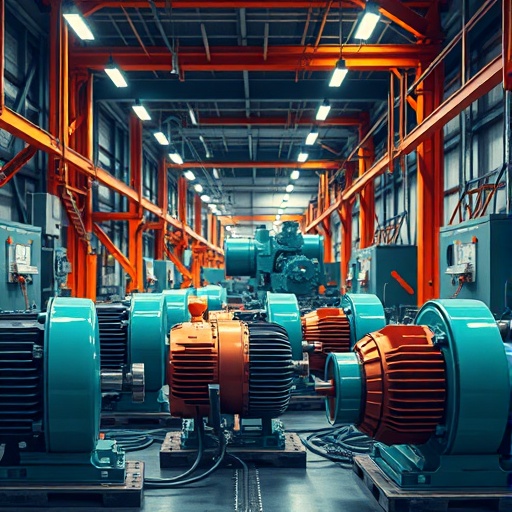
The Role of Electric Motors in Electric Trucks
Electric motors propel electric trucks forward, replacing diesel engines with efficient, instant-torque systems that redefine logistics. Custom electric motors, optimized for heavy payloads, deliver peak power from standstill, enabling rapid acceleration on highways. In fleet operations, these motors integrate with batteries for ranges exceeding 500 miles, customized via modular stators for different truck classes—from urban delivery vans to long-haul semis. Induction motors handle the high torque needs of towing, while synchronous variants ensure smooth cruising at constant speeds. Custom designs incorporate cooling systems to manage heat during prolonged climbs, preventing efficiency drops. Regenerative braking in electric trucks recaptures up to 30 percent of energy, with motors doubling as generators to recharge on descents. Manufacturers tailor gear ratios to match motor outputs, optimizing for both city stop-go and interstate travel. As charging infrastructure expands, custom motors evolve with faster-response controllers for quick top-ups. In cold climates, insulated windings maintain performance, crucial for reliable deliveries. Telematics link motors to cloud analytics, predicting maintenance for minimal downtime. Electric trucks benefit from lighter custom motors using composite materials, increasing cargo capacity. Safety features like torque vectoring enhance stability, reducing accident risks. This shift toward electric motors in trucks promises lower emissions and operating costs, positioning custom solutions at the forefront of sustainable transport evolution.
Sustainability and Custom Electric Motors
Sustainability drives custom electric motor design toward eco-friendly materials and processes that minimize environmental impact throughout their lifecycle. Engineers prioritize recyclable rare-earth alternatives in permanent magnets, reducing mining dependencies for brushless DC motors. Custom electric motors now feature low-loss cores from sustainable steels, cutting energy use in operation by 20 percent over legacy models. In manufacturing, additive production slashes waste, allowing intricate designs with less material. Lifecycle assessments guide customizations, ensuring end-of-life recyclability for components like copper windings. For induction motors, efficiency classes like IE5 set benchmarks, promoting green certifications in factories. Solar-integrated custom motors power off-grid applications, harnessing renewables directly. Reduced noise from optimized rotors benefits urban deployments, aligning with noise pollution regulations. Custom motors in electric trucks incorporate biodegradable lubricants, easing disposal. Supply chains emphasize ethical sourcing, tracking carbon footprints from raw materials to assembly. Innovations like self-healing insulation extend motor life, curbing replacement frequency and e-waste. Education on sustainable custom motor use empowers industries to adopt them widely. As regulations tighten, custom electric motors lead with modular upgrades, avoiding full replacements. This commitment to sustainability not only complies with global standards but also enhances brand value, proving that high-performance machinery can coexist with planetary health.