A Deep Dive into the Benefits of Automatic Lathes in Screw Machining
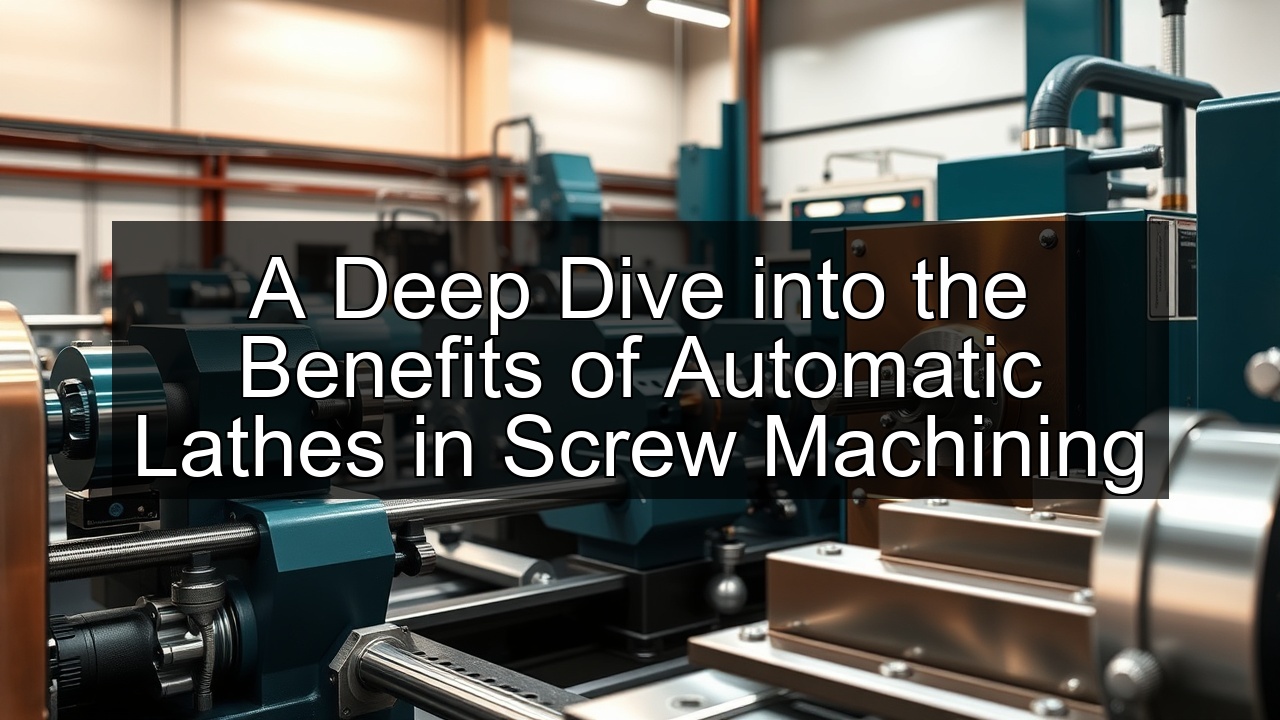
Understanding Automatic Lathes in Screw Machining
The Evolution of Screw Machining
Screw machining transformed manufacturing when inventors introduced automatic lathes in the late 19th century, revolutionizing how industries produced small, intricate parts. Early screw machines relied on manual operations, but the shift to automation during the Industrial Revolution boosted efficiency in metalworking. Machinists once spent hours on repetitive tasks like turning, threading, and drilling with basic lathes and drill bits. Now, CNC screw machining dominates, allowing precise control over every cut. This evolution stems from the need for high-volume production in sectors like automotive and electronics. Automatic lathes, including turret lathes and screw machines, handle complex operations such as milling and chucking stock material with minimal human intervention. The rise of CNC technology in the 1980s further propelled screw machining forward, integrating computer controls for superior accuracy. Today, precision screw machining meets demands for tiny components in medical devices and aerospace, where even minor errors prove costly. Barfeeders and barloaders automate material feeding, extending the legacy of these machines. As industries pursue faster turnaround times, the evolution continues, blending traditional metalworking skills with digital precision to create reliable screw machining solutions.
Types of Automatic Lathes
Automatic lathes come in various forms, each tailored to specific screw machining needs, from simple turning to multifaceted operations. Turret lathes stand out for their multi-tool turrets, enabling quick switches between cutting tools like drill bits and milling cutters without stopping production. These machines excel in CNC screw applications, processing stock through chucks or collets for threading and boring. Swiss lathes, a subset of automatic lathes, guide tools along the workpiece's length, ideal for slender parts that require minimal deflection. Single-spindle automatic lathes focus on high-speed, single-part runs, while multi-spindle versions handle multiple pieces simultaneously, slashing cycle times in swiss screw machining. CNC lathes incorporate programmable controls, turning manual setups into automated workflows that machinists oversee from a distance. Milling machines often integrate with lathes for hybrid operations, combining turning with milling on the same setup. Vises and tailstocks secure workpieces firmly, ensuring stability during high-precision cuts. Barloaders feed raw material continuously, reducing downtime in long runs. Each type of automatic lathe addresses unique challenges in metalworking, from prototyping to mass production, making them indispensable in modern screw machining environments.
Introduction to Swiss Style Lathes
Swiss style lathes, often called swiss lathes, originated in Switzerland for watchmaking, where extreme precision defined success. These machines slide the cutting tool parallel to the workpiece, supported by a guide bushing near the collet, which prevents bending during machining. In CNC swiss screw machining, this design shines for producing long, thin parts like pins and shafts without vibration issues that plague traditional lathes. Machinists program the CNC lathe to execute turning, milling, and threading in one seamless process, often using carbide tools for durability. The swiss screw machining process starts with loading stock into the barfeeder, which advances material as the collet grips it tightly. Unlike standard turret lathes, swiss style lathes minimize tool overhang, achieving tolerances down to microns—critical for swiss cnc machining in medical implants or electronics connectors. Integration of milling capabilities allows complex geometries, blending lathe and cnc mill functions. ISO certification ensures these machines meet global standards for quality in precision screw machining. As demands for miniaturization grow, swiss lathes evolve with advanced software, empowering machinists to push boundaries in metalworking while maintaining efficiency and reliability.
Key Benefits of Using Automatic Lathes
Increased Precision and Accuracy
Automatic lathes deliver unmatched precision in screw machining, where even slight deviations can ruin entire batches. CNC swiss screw machining leverages computer-guided paths for tools, ensuring consistent cuts across thousands of parts. Guide bushings in swiss lathes keep workpieces stable, reducing flex that affects accuracy in traditional setups. Carbide inserts withstand high speeds without wear, maintaining sharp edges for fine threading and drilling. Machinists benefit from real-time monitoring via CNC controls, adjusting parameters on the fly to hit tight tolerances. This precision extends to milling operations, where automatic lathes integrate cnc mill functions for intricate profiles. Collets and chucks grip stock firmly, preventing slippage that could compromise dimensions. In metalworking, such accuracy cuts scrap rates dramatically, saving costs on materials like stainless steel or titanium. ISO certification verifies that these machines adhere to rigorous standards, building trust with clients in industries needing flawless parts. Overall, the precision of automatic lathes transforms screw machining from an art into a science, enabling innovations in fields like robotics and telecommunications.
Enhanced Production Speed
Automatic lathes accelerate production in screw machining by automating repetitive tasks that once slowed workflows. CNC swiss machining runs cycles in seconds, far outpacing manual methods, thanks to rapid tool changes in turret setups. Barfeeders supply continuous stock, eliminating pauses for reloading and keeping the lathe humming through high-volume orders. Multi-spindle automatic lathes process multiple parts at once, multiplying output without expanding floor space. In swiss screw machining, the sliding headstock design allows simultaneous operations—turning one end while milling the other—boosting throughput. Machinists program sequences in advance, so the CNC lathe executes flawlessly without constant oversight. Integration of barloaders further streamlines material handling, feeding bars up to several meters long seamlessly. This speed proves vital in cnc screw machining for just-in-time manufacturing, meeting tight deadlines in automotive assembly lines. Even complex jobs involving vise-held fixtures or tailstock support finish faster, as automatic lathes optimize paths to avoid unnecessary movements. The result? Enhanced production speed not only increases revenue but also allows shops to take on diverse projects, solidifying their role in competitive metalworking markets.
Reduced Labor Costs
Automatic lathes slash labor costs in screw machining by minimizing the need for skilled hands on every operation. Once, machinists spent shifts adjusting chucks, swapping drill bits, and monitoring each cut—now, CNC controls handle those duties autonomously. In CNC swiss screw machining, a single operator oversees multiple machines, freeing personnel for design or quality checks. Turret lathes automate tool indexing, reducing setup times from hours to minutes and cutting overtime expenses. Barloaders and barfeeders eliminate manual stock loading, a tedious task that previously required constant attention. Swiss style lathes, with their precise collet systems, produce parts reliably without frequent interventions, lowering error-related rework. ISO certification streamlines compliance, avoiding costly audits or retraining. Machinists shift to higher-value roles, like programming Mastercam software for custom runs, rather than grunt work. This efficiency extends to milling integrations, where automatic lathes combine processes to shorten overall labor hours. Shops report up to 50% reductions in manpower needs, reinvesting savings into technology upgrades. Ultimately, reduced labor costs make automatic lathes a smart investment for sustainable growth in precision screw machining.
Integrating Technology in CNC Swiss Screw Machining
Role of Mastercam in CNC Machining
Mastercam software revolutionizes CNC swiss screw machining by simplifying complex programming for automatic lathes. This CAD/CAM tool lets machinists design parts in 3D, then generate toolpaths for turning, milling, and threading with a few clicks. In swiss lathes, Mastercam optimizes guide bushing positions and collet feeds, ensuring smooth operations on slender stock. It simulates entire runs virtually, spotting collisions or inefficiencies before the CNC lathe ever starts—saving time and materials. For cnc screw machining, the software supports multi-axis control, blending lathe and mill functions seamlessly. Machinists import models, define carbide tool libraries, and output G-code tailored to turret setups or barfeeders. This integration boosts accuracy in metalworking, as Mastercam's post-processors adapt to specific machines like swiss style lathes. Training on Mastercam empowers teams to handle intricate jobs, from aerospace fittings to medical screws, without extensive trial-and-error. As an industry standard, it pairs with ISO certification processes, documenting workflows for audits. Mastercam's role extends beyond coding; it drives efficiency, allowing shops to scale CNC swiss machining production while maintaining precision and reducing downtime.
The Importance of ISO Certification
ISO certification anchors trust in CNC swiss screw machining, proving that facilities meet international benchmarks for quality and consistency. This standard, particularly ISO 9001, mandates documented processes for everything from stock inspection to final deburring on automatic lathes. In swiss machining, certification ensures collets and chucks maintain grip integrity, preventing defects in high-stakes parts. Machinists follow calibrated procedures for carbide tool changes and barloader setups, minimizing variations that could affect tolerances. For cnc screw operations, ISO compliance streamlines supplier audits, opening doors to global contracts in automotive or defense. It covers metalworking safety, from vise securement to tailstock alignment, protecting workers and equipment. Certified shops integrate Mastercam outputs with verified CNC programs, guaranteeing repeatable results. The certification process involves rigorous training, fostering a culture of excellence among machinists. Benefits ripple outward: reduced recalls, faster certifications for new clients, and enhanced reputation in precision screw machining. Without ISO, even advanced swiss lathes risk credibility gaps; with it, operations thrive on proven reliability, fueling long-term partnerships and innovation.
Effectiveness of Barfeeders and Barloaders
Barfeeders and barloaders prove essential in CNC swiss screw machining, automating material supply to keep automatic lathes running nonstop. Barfeeders push stock through the collet incrementally, syncing with the CNC lathe's cycles for uninterrupted turning and milling. In swiss style lathes, they handle thin diameters without buckling, supporting high-precision threading on long parts. Barloaders take it further, robotically loading full bars into the machine, slashing manual handling and setup times. These devices integrate with turret lathes, feeding carbide-cuttable alloys like aluminum or titanium efficiently. Machinists program them via the CNC interface, adjusting speeds to match drill bit feeds or milling depths. Effectiveness shines in high-volume cnc screw machining, where downtime from reloading could cost thousands per hour. They reduce waste by utilizing nearly the entire bar length, optimizing stock use in metalworking. Paired with ISO-certified maintenance, barfeeders and barloaders ensure reliability, preventing jams that disrupt workflows. Shops praise their ROI, as faster throughput offsets initial costs quickly. In essence, these tools elevate automatic lathe performance, turning screw machining into a lean, productive powerhouse.
Applications of CNC Swiss Screw Machining
Industries Benefiting from Swiss Machining
CNC swiss screw machining serves diverse industries craving precision parts, starting with medical devices where tiny screws and fittings demand micron-level accuracy. Swiss lathes produce implants and surgical tools from biocompatible metals, using carbide tools for sterile, flawless finishes. In aerospace, cnc swiss machining crafts fuel line components and sensor housings, enduring extreme conditions without failure. Automotive sectors rely on it for transmission gears and brake fittings, integrating milling for complex shapes on automatic lathes. Electronics manufacturers turn to swiss screw machining for connectors and micro-housings, handling delicate stock via barfeeders. Defense applications include firearm parts and avionics, where ISO certification verifies durability. Even consumer goods, like watch components or bike fasteners, benefit from the speed and precision of turret lathes. Metalworking expertise shines across these fields, as machinists adapt CNC programs for vise-held prototypes or tailstock-supported runs. The versatility of swiss cnc machining fosters innovation, from custom threading to hybrid mill-lathe operations. As global supply chains tighten, these industries lean on swiss machining to stay competitive, producing reliable parts that drive technological progress.
The Role of Metalworking in Precision Parts Manufacturing
Metalworking forms the backbone of precision parts manufacturing through CNC swiss screw machining, where skilled cuts turn raw stock into functional components. Automatic lathes execute turning, drilling, and milling with carbide tools, shaping metals like steel or brass to exact specs. In screw machines, metalworking involves threading dies and collet chucks that grip without marring surfaces, essential for high-tolerance gears. Machinists oversee CNC mills and lathes, blending traditional techniques with digital precision for seamless workflows. Barloaders feed material steadily, allowing continuous metalworking sessions that build intricate assemblies. This process supports applications from hydraulic fittings to optical mounts, where surface finish matters as much as dimensions. ISO certification guides metalworking standards, ensuring traceability from stock to shipment. Vises and tailstocks secure pieces during aggressive cuts, preventing distortions. The role expands with Mastercam, enabling rapid prototyping in metalworking shops. Ultimately, metalworking in precision manufacturing via swiss lathes not only meets but exceeds demands, powering advancements in everything from renewable energy hardware to telecommunications infrastructure.
Case Studies: Successful Implementations
Successful implementations of CNC swiss screw machining highlight real-world gains, like a medical firm that adopted swiss lathes to produce insulin pump components. Facing tolerances under 0.001 inches, they integrated Mastercam for programming and barfeeders for 24/7 runs, cutting lead times by 40% while earning ISO certification for quality assurance. In aerospace, a supplier used turret lathes with carbide milling tools to machine turbine fittings, reducing scrap by 30% through precise collet control and CNC optimization. An automotive parts maker tackled high-volume cnc screw production for engine valves, employing multi-spindle automatic lathes and vise fixtures to double output without extra staff. These cases showcase metalworking prowess, as machinists fine-tuned tailstock supports for vibration-free threading. Another electronics company implemented swiss style lathes for connector pins, blending milling and turning to handle diverse stock, resulting in 25% cost savings. Each story underscores the keyword's impact: CNC swiss screw machining delivers reliability, from prototype to production. Lessons learned include regular carbide maintenance and software updates, ensuring sustained success across industries.
Future Trends in Screw Machining Technology
Advancements in Materials: Carbide and Beyond
Advancements in materials propel screw machining forward, with carbide leading as the go-to for durable, heat-resistant tools in CNC swiss applications. Enhanced carbide grades now feature nano-coatings that extend life in high-speed turning and milling on automatic lathes. Beyond carbide, ceramic inserts emerge for superalloys, reducing wear in aerospace swiss screw machining. Machinists experiment with hybrid composites, blending metals for lighter, stronger stock fed via barloaders. These innovations demand updated CNC programming in Mastercam to optimize feeds for new properties. In metalworking, polycrystalline diamond tools challenge carbide in non-ferrous jobs, enabling finer threading on swiss lathes. Sustainability drives bio-based lubricants, minimizing environmental impact during collet-held operations. ISO certification evolves to validate these materials' performance, ensuring safety in precision screw machining. Future trends point to self-healing alloys that repair micro-cracks mid-process, integrated with sensor-equipped turrets. As cnc swiss machining scales, these material leaps promise faster cycles and greener practices, empowering machinists to tackle ever-complex designs without compromise.
The Impact of Automation on Machinists' Roles
Automation reshapes machinists' roles in screw machining, shifting focus from manual labor to strategic oversight in CNC swiss environments. Automatic lathes handle routine tasks like chucking and drilling, freeing experts to program intricate paths using Mastercam. In swiss style lathes, machinists now analyze data from integrated sensors, predicting tool wear on carbide bits before failures occur. This evolution demands upskilling in AI-driven diagnostics, turning shops into smart factories. Barfeeders and barloaders automate feeding, so machinists prioritize quality checks over loading duties. Metalworking still requires hands-on tweaks for vise alignments or tailstock adjustments in custom runs. ISO certification training emphasizes digital literacy, preparing teams for collaborative robots that assist in milling setups. The impact? Higher job satisfaction, as machinists innovate rather than repeat, boosting creativity in cnc screw machining. While entry-level roles evolve, experienced pros lead implementations, ensuring automation enhances rather than replaces human insight. Looking ahead, this trend fosters versatile careers, blending traditional lathe knowledge with cutting-edge tech for sustained industry growth.
Sustainable Practices in CNC Machining
Sustainable practices redefine CNC machining, emphasizing eco-friendly methods in swiss screw production to cut waste and energy use. Automatic lathes now feature regenerative drives that recapture power during deceleration, slashing consumption in long barfeeder runs. Machinists select recyclable stock and carbide tools with extended lifespans, minimizing landfill contributions in metalworking. Water-based coolants replace oils in swiss lathes, reducing toxicity while maintaining collet precision. CNC programming via Mastercam optimizes paths to shorten cycles, lowering overall carbon footprints. ISO certification includes environmental clauses, verifying shops recycle scraps from turret operations. In cnc swiss screw machining, dry machining techniques eliminate fluids altogether for certain alloys, promoting greener workflows. Solar-powered facilities and LED lighting further integrate sustainability. Case studies show 20-30% energy savings without sacrificing accuracy in threading or milling. These practices not only comply with regulations but attract eco-conscious clients in medical and automotive sectors. As trends accelerate, sustainable CNC machining ensures the industry's longevity, balancing precision with planetary responsibility for future generations.
See Also
- Why Carbide Tools Are Essential for Swiss Screw Manufacturing
- The Future of Metalworking with CNC Swiss Screw Machining Innovations
- Comparing CNC Mills and Swiss Lathes for Optimal Machining Solutions
- The Art of Threading in CNC Swiss Screw Machining
- The Essential Guide to Choosing the Right Vise for Swiss Machining Projects